

What is Full Mouth Rehabilitation?
Full Mouth Rehabilitation (also known as Full Mouth Reconstruction) is a comprehensive dental treatment approach designed to restore the health, function, and appearance of the entire mouth. It involves rebuilding or replacing multiple teeth while addressing underlying dental issues such as severe decay, worn teeth, bite problems, missing teeth, trauma, or failing restorations.
The goal is not only to create a beautiful smile but also to restore proper chewing function, eliminate pain, improve oral health, and ensure long-term stability.
Successful full mouth rehabilitation often requires collaboration between multiple dental specialties, including restorative dentistry, prosthodontics, periodontics, orthodontics, and endodontics. Among these, endodontics plays a critical role in preserving natural teeth whenever possible.
Why Endodontics Plays a Critical Role
Before placing crowns, bridges, or other restorations, dentists must determine whether compromised teeth can be saved. Endodontic treatment, commonly known as root canal therapy, helps preserve teeth affected by deep decay, infection, or pulp damage.
Saving natural teeth offers several benefits:
- • Maintains natural chewing efficiency
- • Preserves jawbone health
- • Supports proper bite alignment
- • Reduces the need for extractions and replacements
- • Provides a stable foundation for restorative treatment
In many full mouth rehabilitation cases, endodontic therapy is the key step that allows patients to keep their natural teeth while eliminating infection and discomfort.
Case Spotlight: Preserving Three Teeth in a 13-Year-Old Patient
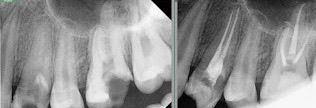
At HTX Endodontics, a 13-year-old patient was referred for evaluation of teeth #12, #14, and #19 after significant decay was identified.
Initial Findings
Clinical examination revealed:
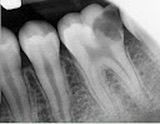
- • Large carious defects in teeth #12, #14, and #19
- • Diagnosis of Asymptomatic Irreversible Pulpitis
- • Diagnosis of Asymptomatic Apical Periodontitis
- • Radiographic evidence of widened periodontal ligament (PDL) space around the affected teeth
Interestingly, despite the extent of the damage, the patient was not experiencing severe symptoms. This demonstrates how serious dental infections can sometimes progress silently before causing noticeable pain.
Treatment Options Discussed
The patient's family was presented with several treatment options, including:
- • Non-surgical root canal treatment
- • Extraction
- • No treatment
After reviewing the findings and discussing the long-term implications of each option, the decision was made to preserve the natural teeth through endodontic therapy.
Same-Day Treatment
To prevent further progression of infection and preserve the patient's natural dentition, root canal treatment was completed on all three teeth during a single visit.
Treatment included:
- • Root Canal Therapy on teeth #12, #14, and #19
- • Four canals cleaned, shaped, and obturated in teeth #14 and #19
- • Two canals cleaned, shaped, and obturated in tooth #12
- • Bioceramic sealer and gutta-percha used for root canal filling
- • Composite orifice barriers placed following treatment
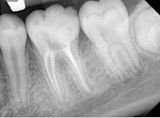
Patency was successfully achieved in all roots, and post-operative imaging confirmed satisfactory treatment outcomes.
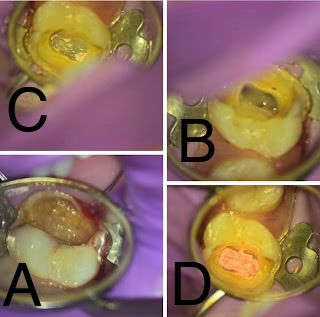
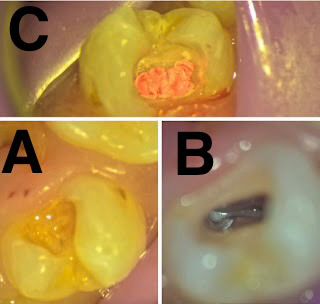
This case highlights an important principle of full mouth rehabilitation: preserving natural teeth whenever possible.
Had these teeth been extracted, the patient could have faced:
- • Future bite complications
- • Bone loss in affected areas
- • More extensive restorative procedures
- • Increased treatment costs over time
Instead, endodontic treatment eliminated infection while maintaining the patient's natural teeth, creating a healthier and more stable foundation for future dental care.
Clinical Outcome
The prognosis for all treated teeth was favorable following treatment. By addressing the infection early and preserving the natural dentition, the patient was able to avoid tooth loss and maintain normal oral function.
This case demonstrates how endodontics can be a crucial component of comprehensive dental rehabilitation, even in young patients.
Conclusion
Full Mouth Rehabilitation is about more than restoring damaged teeth—it is about preserving oral health, function, and quality of life. Endodontics plays a vital role in this process by eliminating infection, saving natural teeth, and providing the foundation needed for long-term restorative success.
This case serves as a reminder that even severely compromised teeth can often be saved with timely diagnosis and expert endodontic care, helping patients maintain healthy smiles for years to come.